QBIQ NEXUS
Quantum-Class Communication for Every Device
Qbiq Nexus transforms mobile and edge communication into a resilient, agent-driven mesh optimized by quantum logic. Built on the principles of Hamiltonian mechanics, geodesic routing, and swarm synchronization, it makes every connected device a sovereign, self-optimizing node.

From tower-reliant coverage to sovereign edge mesh.
Solve Poor Coverage. Unlock Autonomy.
A decentralized mesh built from quantum-class agents.
How Qbiq Nexus Works
Qbiq replaces traditional network control with self-aware agents that adapt on the fly. This section explains how it functions in 4 powerful layers.
1. Intelligent Agents at the Edge
Each node acts as an autonomous decision-maker.
Each device becomes an autonomous agent that makes decisions using a physics-based control model (called a Data Hamiltonian).

2. Self-Optimizing Blobs
Blobs learn using real-time micro-adjustments.
Agents (or 'blobs') learn and adapt by optimizing for both strict rules and flexible preferences, using a process called 'chattering optimization'.
3. Geodesic Routing
Geodesic routing avoids latency turbulence.
Messages are routed not by static tables, but by computing optimal paths—like taking the smoothest curve in 3D space.
4. Swarm Intelligence
Agents align like birds in flight.
Agents stay in sync like birds in a flock using Noether’s symmetry principles—preserving harmony without central control.
Under the Hood
Explore the physics and math behind Qbiq’s real-time optimization. This is how each agent operates like a mini control system.

H_i(x, p, u) = H_{i,A}(x, p, u) + \sum_j \lambda_{i,j} \phi_{i,j}(x, p, u)Each agent balances hard rules with soft goals. H_i is the agent's decision engine; H_{i,A} are the strict rules, and the phi_{i,j} are flexible goals with importance weights lambda_{i,j}.

\dot{x}_i = \frac{\partial H_i}{\partial p}, \quad \dot{p}_i = -\frac{\partial H_i}{\partial x}The agent constantly updates itself based on how the system is changing, like steering a car by feeling the road.

u_i(t) = u_i^*(0) - \delta \int \left( \frac{\partial H_i}{\partial u} + \sum_j \lambda_{i,j} \frac{\partial \phi_{i,j}}{\partial u} \right) d\tauAgents continuously adjust their actions by watching for changes and softly correcting themselves over time.

X(t) = \Phi(X, \dot{X}, t) - \Theta \cdot \Phi(X, \dot{X}, t)Routing decisions evolve by following the smoothest, lowest-cost paths through changing network conditions.
Core Subsystems
Qbiq includes modular engines that enable intelligence, perception, and decision-making in real time—without cloud overhead.
Vogon DQLDB
Tamper-proof, time-stamped, semantically tagged transactions.
Data is encoded into Base58 epochs tagged with where, when, what, and why—making each piece of information ready for immediate use.
QuantumVM
Just-in-time logic at the edge.
Runs agent logic live on edge devices. Each agent follows a Planner → Adapter → Decoder loop for fast, real-time inference.

QuanTomo
Perception without retraining.
Agents sense and adapt to their environment—without retraining—by performing low-power field tomography.

Built for the Future of Silicon
Designed for next-gen chips, Qbiq runs faster, cooler, and smarter than conventional logic on emerging photonic hardware.
Qbiq is engineered for quantum-dot-enhanced, photonic chipsets that offer:
- Near-light-speed communication (10–100x faster)
- Ultra-efficient symbolic processing (70% less power)
- Electron-plasmon interactions for smart routing


**What this means:** Qbiq agents can make decisions almost instantly, using very little power, even in remote areas.

Why Qbiq Outperforms Traditional 5G
No towers. No reconfigurations. No bottlenecks. Qbiq builds the future on autonomous coordination.
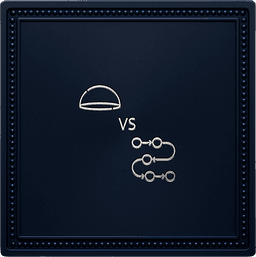
Static vs Dynamic
Legacy Systems:
Fixed routing tables, fragile to change
Qbiq Nexus:
Geodesic paths update in real-time
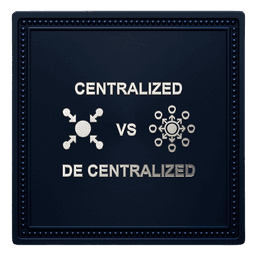
Centralized vs Decentralized
Legacy Systems:
Heavy reliance on cloud or base stations
Qbiq Nexus:
Local agents make decisions instantly
Manual vs Autonomous
Legacy Systems:
Slow reconfigurations by engineers
Qbiq Nexus:
Self-healing mesh from swarm behavior

Static Identity vs Sovereign
Legacy Systems:
Tied to centralized SIMs or IPs
Qbiq Nexus:
Self-sovereign identity anchored in DQLDB
Try Qbiq Yourself
Run simulations, inspect agent decisions, and deploy test nodes on virtual mesh environments.

Why Carriers & Citizens Should Care
From coverage dead zones to network overload, Qbiq solves real-world problems without needing new towers or centralized cloud.

Fixes Poor Coverage
Qbiq builds intelligent mesh networks that adapt in real time—no tower required. Estimated 50–80% dead zone reduction.
Lowers Power Use
With symbolic logic and localized learning, Qbiq uses up to 70% less energy than cloud-optimized networks.

Eliminates Bottlenecks
Agents reroute on failure within milliseconds. 99.99% uptime in simulated tests.

Enables Sovereign Infrastructure
Deployable without dependency on telco contracts, centralized clouds, or government licenses.